|
Aziz Tayob Architects
|
Thursday, 11 June 2009 08:01 |
|
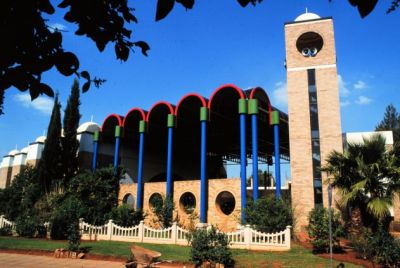
Aziz Tayob Architects Inc is an architectural firm based in Pretoria, South Africa. Established over 39 years ago (1970) in Johannesburg, it has experience in more than 700 projects all over the country, ranging from residential, commercial, educational, community, religious, restoration and state projects. The firm has strove to create buildings that are honest, functional, though provoking and innovative. The firms design approach has also been to achieve the most advantageous designs from the very limited resources and space available, free from trendy frills. In recognition of this, the firm has received numerous merit awards for design. |
|
Last Updated on Friday, 12 June 2009 20:30 |
|
|
Tuesday, 26 May 2009 09:00 |
Aziz Tayob graduated at the University of the Witwatersrand as the first black architect in South Africa in 1969. The practice was established in 1970 in Pageview, Johannesburg. After the removal of Pageview by the previous government, the practice has since operated in Laudium, Pretoria, an area formally reserved for Indians in terms of the Group Areas Act. Over the past 39 years of its existence, the firm has strove to create buildings that are honest, functional, thought provoking and innovative. The design approach has been to achieve the most advantageous design for the very limited resources and space available to the underpriviledged communities of South Africa. This has resulted in the maximum utilisation of land, space and cost efficient quality and creative design, free from trendy frills. In recognition of this, the firm has received merit awards from the S.A. Institute of Architects in 1974 as well as the Transvaal Institute of Architects in 1980. Being the first black architectural practice in the country, the practice has during its existence trained and employed more than 35 architects and technicians from the disadvantaged sector. The practice has also provided student sponsorships. The firms works are still geared to serving the same disadvantaged sector it has always served. |
|
Last Updated on Thursday, 11 June 2009 08:07 |
|
Street & Postal Address 261 Tangerine Street, Laudium 0037, Pretoria PO Box 13107, Laudium 0037 South Africa Telephone & Fax tel (012) 374 2289 / 374 2388 fax (012) 374 2774 contact person : Aziz Tayob / Haneef Tayob e-mail
This e-mail address is being protected from spambots. You need JavaScript enabled to view it
(substitute 'XXXX' with 'architects')
web site http://tayob.co.za |
|
Last Updated on Monday, 29 June 2009 16:03 |
|
|
Type of Projects Undertaken |
|
|
|
Commercial Shops, shopping centres, offices Community Civic Centres Educational Schools, schools for physically handicapped, schools for mentally handicapped. Health Care & Laboratories Hospitals, clinics, medical suites, Forensic Laboratories. Industrial Warehousing, Factories, Production layouts Residential Private residences, townhouses, highrise and low density, affordable housing, Hostels for schools and industrial staff. Religious Mosques, Madressas and Temples Sports and Recreation Stadiums, Sports Centres.
Renovation & Restoration Heritage Projects
Correctional Facilities Prisons and other Correctional facilities
Municipal and Government Parliament Buildings, Council Chambers, Government Administration Buildings |
|
Last Updated on Tuesday, 26 May 2009 16:01 |
|
|
|
|
Featured Projects
The Andrew McColm Forensics Laboratory This project involved the conversion of an old hopital (The Andrew McColm Hospital) into a state of the art forensicss laboratory. On completion, the building housed the worlds laboratory biggest, single automated forensic Analysis System. The challenges were numerous: - Housing state of the art 21st century equipment in a 1950's building.
- Stringent security measures also had to be incorporated into a building which was designed to have public flowing in and out.
- Controlling light and air due to meet the requirements of the 'sterile' DNA robotics laboratory
Part of the solution involved moving the entrance from the south side over to the upper level on the north side. This allowed for the creation of a large entrance foyer. Wards were merged to create the large and long spaces required for the robotic equipment and support laboratories. The facade had to be clad to conceal the number of services required. |
|
|
|